
ProA Load Control · Early access · Patent pending
Stop paying for
Protein A capacity
you never use.
Protein A capture has the largest impact on mAb cost of goods,1 yet most plants load it to a conservative fraction of capacity because outlet UV cannot see the product. ProA Load Control measures antibody inline at the column outlet in real time, so every cycle can run to the capacity you actually have.
Where it fits
At the column outlet. Before the loading decision.
Measure the antibody leaving the column while the load is still running.
Your feed
Antibody and other proteins enter the capture step.
Protein A column
The resin captures antibody. Unbound material leaves the outlet.
Inline sensor
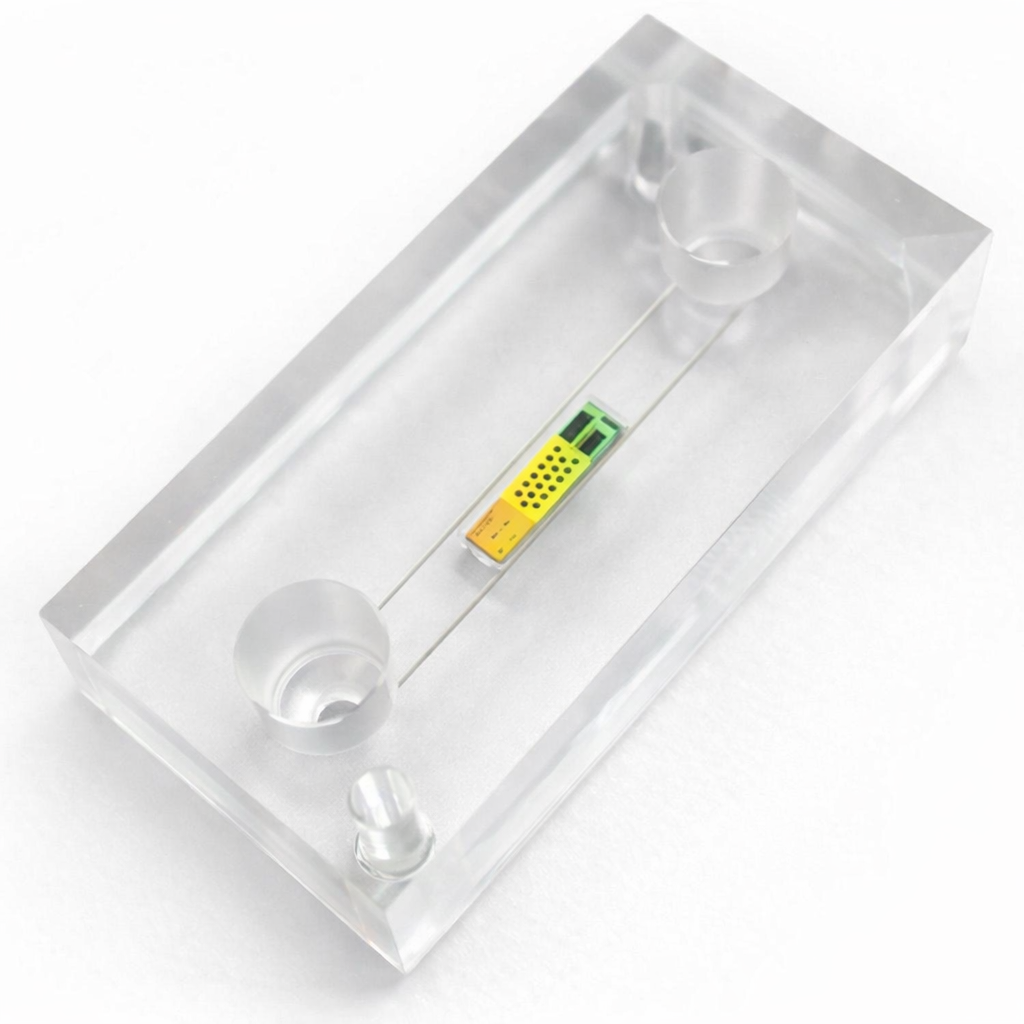
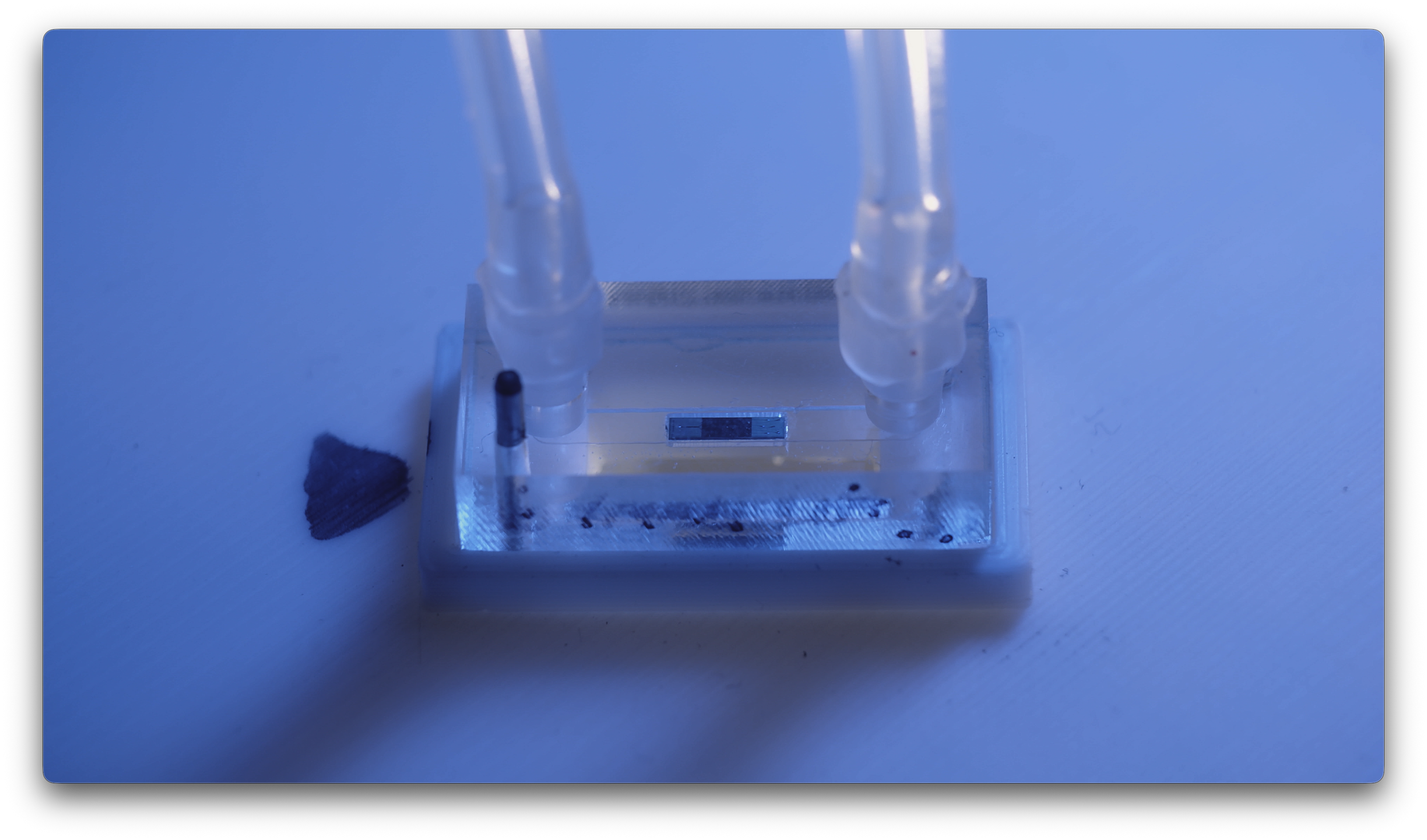
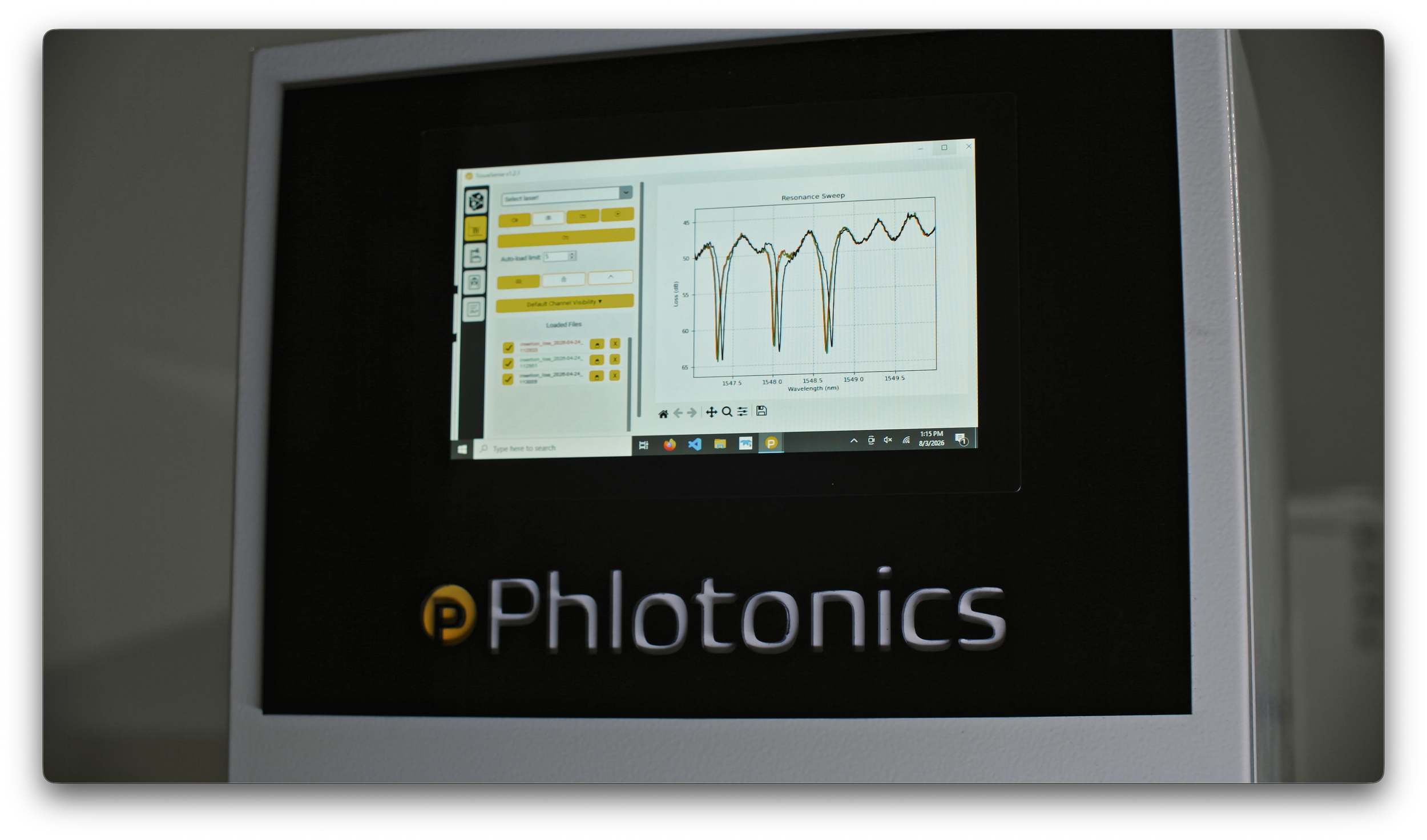
An inline flow cell and reusable reader measure outlet antibody in real time.
Loading decision
Use the breakthrough signal to decide when to stop loading or switch columns at your process limit.
Schematic only; the curve is illustrative and the setpoint is process‑specific. Offline titer remains the reference in an early‑access pilot.
The business case
The capacity is already in your plant.
See how the loading target changes the antibody mass loaded per cycle. This illustration compares 80% and 95% of the same reference capacity.
Conservative loading
Stop at a fixed fraction of reference capacity.
80%of reference capacity
Higher loading scenario
Set the stopping point from measured breakthrough.
95%of reference capacity
More antibody per load.
more antibody loaded per cycle in this illustration
Illustrative loading arithmetic: 95 ÷ 80 − 1 = 18.75%. Assumes the same column and capacity reference, defined for the resin, molecule, residence time and breakthrough threshold. This does not predict recovered mass, cycle count or suite throughput. Usable loading limits and recovery are assessed in your process.
Bench results to date
Antibodies measured.
Cycle after cycle.
Antibody binds to the sensor
Load
Detect antibodies.
0.01%
of a 5 g/L feed concentration detected.
The same sensor resets
Elute
Reset.
Every cycle
Resets during low‑pH elution.
Ready for the next load
Repeat
Measure again.
Same cartridge
Ready for repeated capture cycles.
Bench data, non‑GMP. Schematics are not to scale; symbol counts do not represent concentration ratios.
What one sensor unlocks
Load to breakthrough
Measure outlet antibody to guide each load.
Fewer capture cycles
More antibody per load can reduce cycle count.
Use existing capacity
Put installed skids and columns to work.
Track resin performance
Follow capacity fade, cycle by cycle.
Reset with elution
Regenerate on the same low‑pH step.
One cartridge per batch
Keep it inline through NaOH CIP.
Fits the skid you run
One reader. A fresh cartridge each batch.
The reader stays in place and a fresh cartridge goes in for each batch.
Early access · Non‑GMP
Single‑use sensor cartridge
One cartridge per batch. Stays inline through capture cycles and CIP.
Early‑access pilot
See it on your feed before you commit.
01
A 30‑minute fit call.
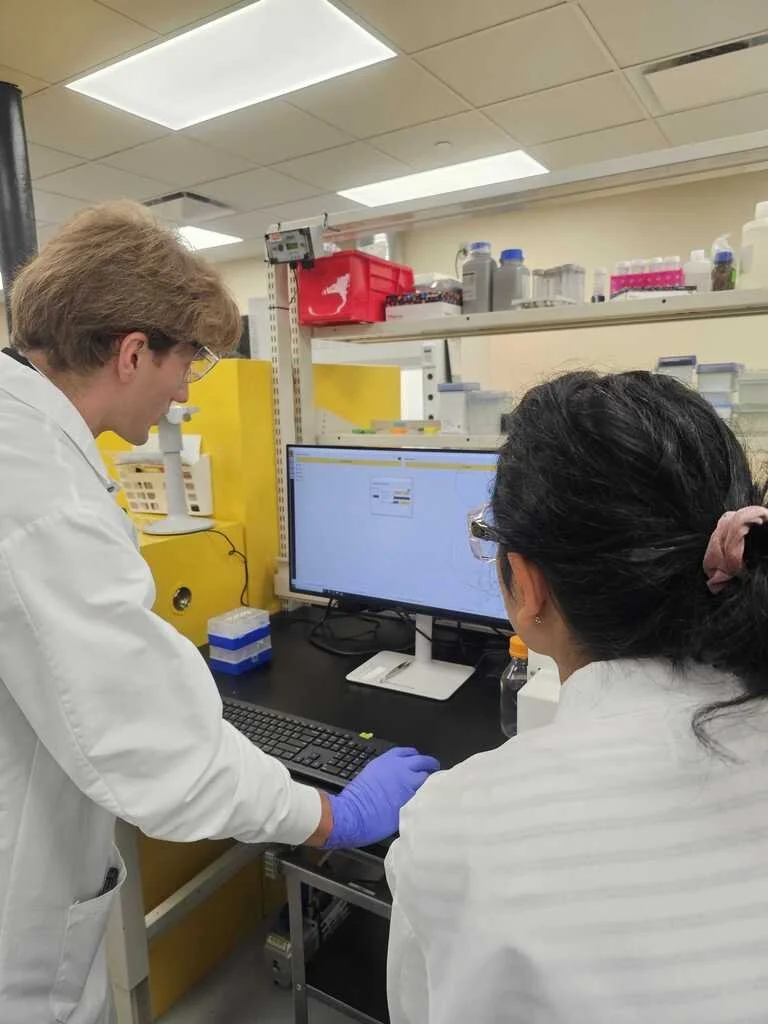
Your molecule, resin and capture setup, and whether a pilot makes sense.
02
A non‑GMP run on your feed.
At bench or PD scale, comparing inline breakthrough with your offline titer.
03
A loading scenario.
What loading to measured breakthrough would mean for cycles, resin and throughput in your process.
Common questions
Does it replace Protein A HPLC?
No. Offline Protein A HPLC stays the reference method for titer. The inline sensor adds a real‑time signal at the step where the load decision is made, when an offline answer would arrive too late to act on. In a pilot, we run the two side by side.
Batch or multicolumn?
Both. In multicolumn capture, switching on measured breakthrough becomes the control point, and a signal that resets with every elution and survives CIP fits either mode.
Is it ready for GMP?
Early‑access pilots are non‑GMP, at bench or PD scale. The path is to start there, then validate against offline titer.
Run your next capture cycle on data.
Early access is open to process development and manufacturing teams now. It starts with a 30‑minute fit call.
1. Crowley et al., Biotechnology and Bioengineering 2024, citing Bansode et al. 2022: Protein A capture has the highest impact on mAb cost of goods. 2. MilliporeSigma application poster PS6885EN on Protein A resin utilization (safety factors and process cost model).

Measure proteins in‑process. Not after.
Visit
260 E. Main Street
Rochester, NY 14604
Site
© 2026 Phlotonics, Inc.