
Technology · Affinity Photonics
A sensor that knows what it is looking for.
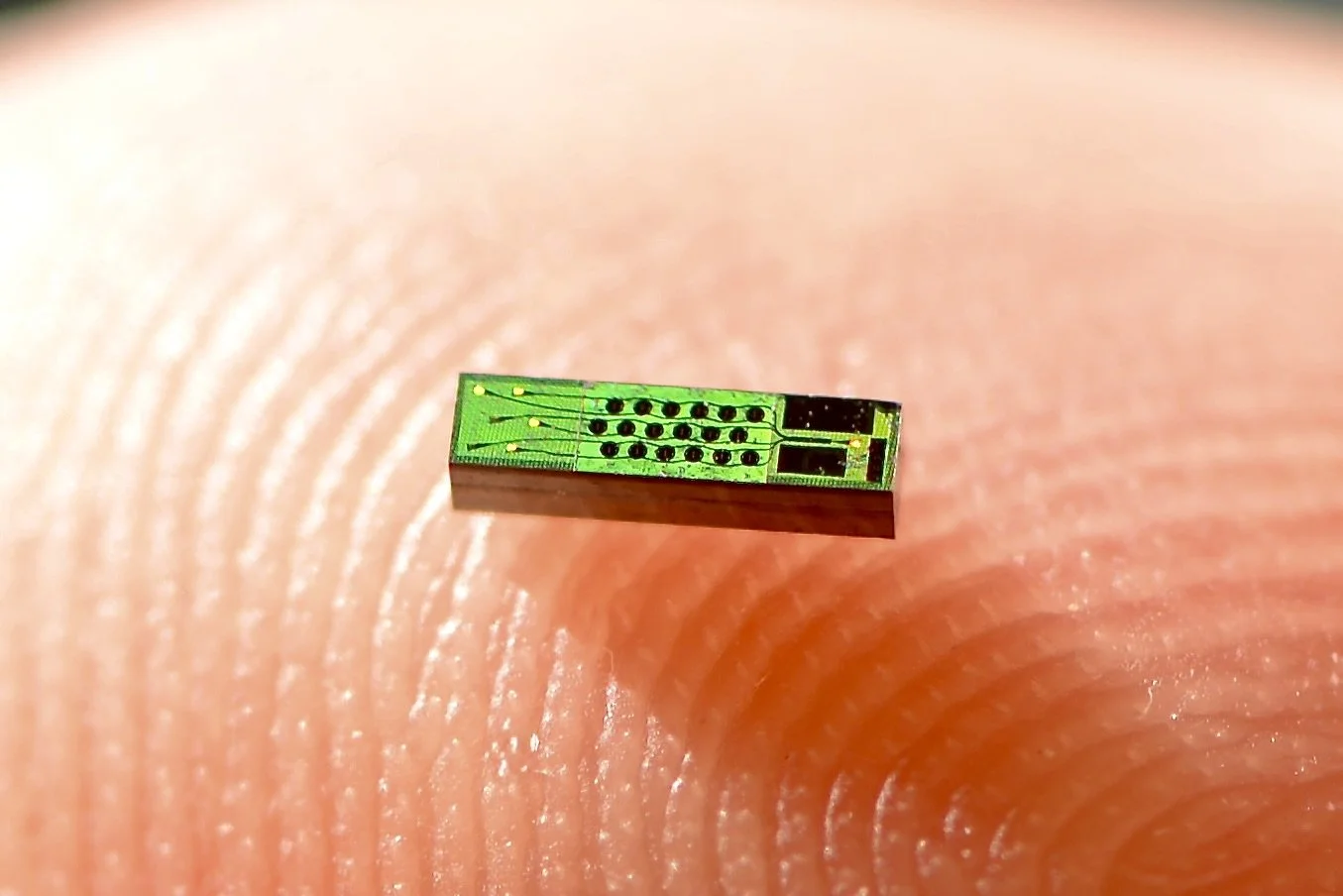
Affinity Photonics pairs engineered affinity probes with photonic integrated circuits. The probe decides what is measured. Light measures it, label‑free and in real time, right in the process stream.
Why specificity matters
Seeing protein is easy. Seeing your product is the hard part.
Today · Outlet UV
Every protein looks the same.
UV absorbance responds to all protein in the stream, so antibody breaking through the column is hidden in the flowthrough.
Affinity Photonics
The signal is the product.
The probe binds the target protein, so the reading tracks your product and not everything else flowing past.
How it works
Bind. Sense. Reference.
01 · Bind
Probes capture the target.
Affinity probes on the chip surface bind the target protein as the process stream flows across it.
02 · Sense
Light reads the binding.
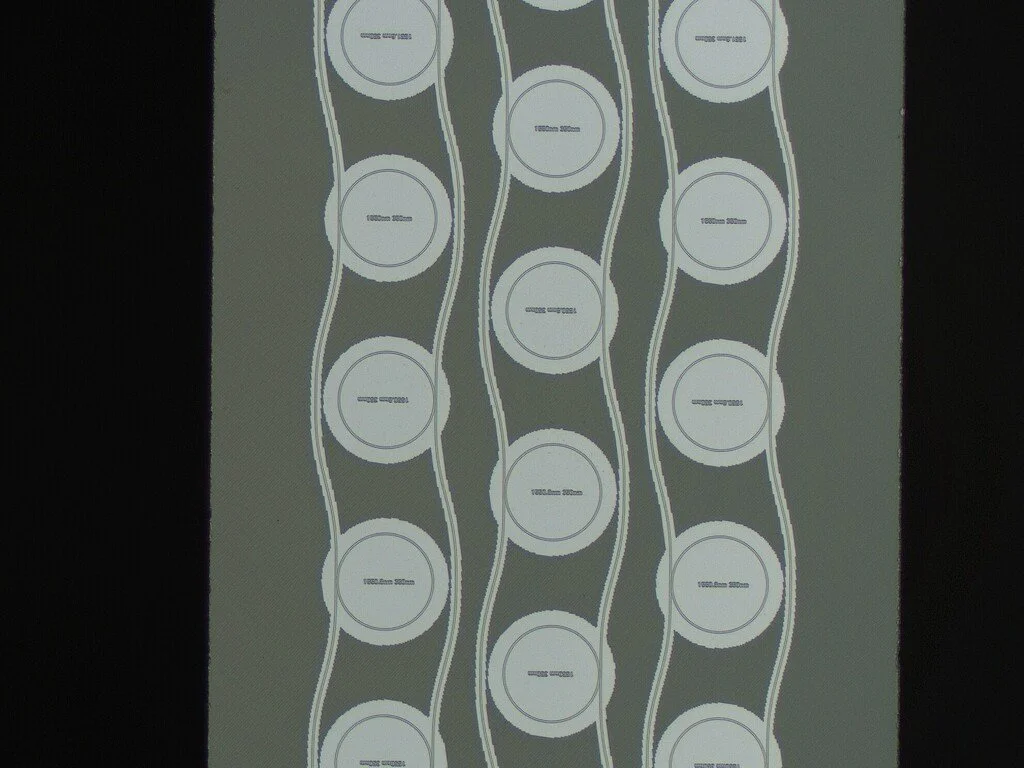
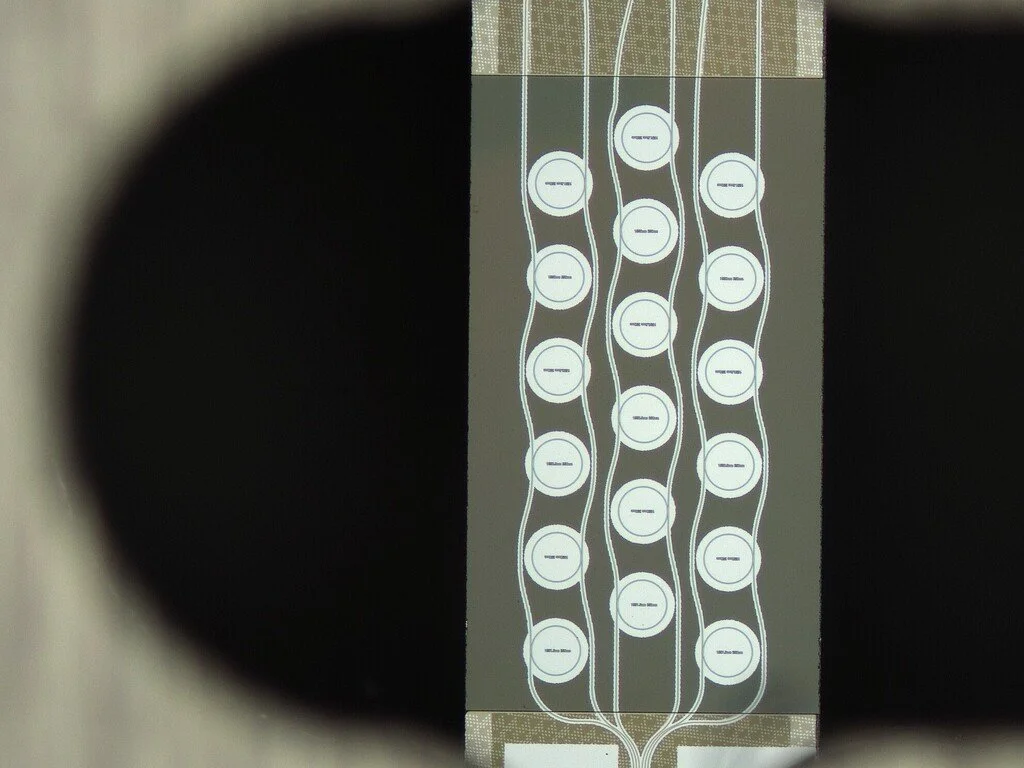
Bound protein shifts the optical resonance of microring resonators on a photonic integrated circuit. No labels, no reagents added.
03 · Integrated reference control
Continuous referencing. Built into the chip.
An integrated negative control provides a continuous reference as protein titer changes.
Built for the process
Made to live where the process does.
Regenerates with elution.
The sensor resets on the same low‑pH step that elutes the column.
Survives CIP and fits your workflow.
One single‑use consumable per batch. It stays in line through NaOH sanitization for the whole batch, then a fresh cartridge goes in.
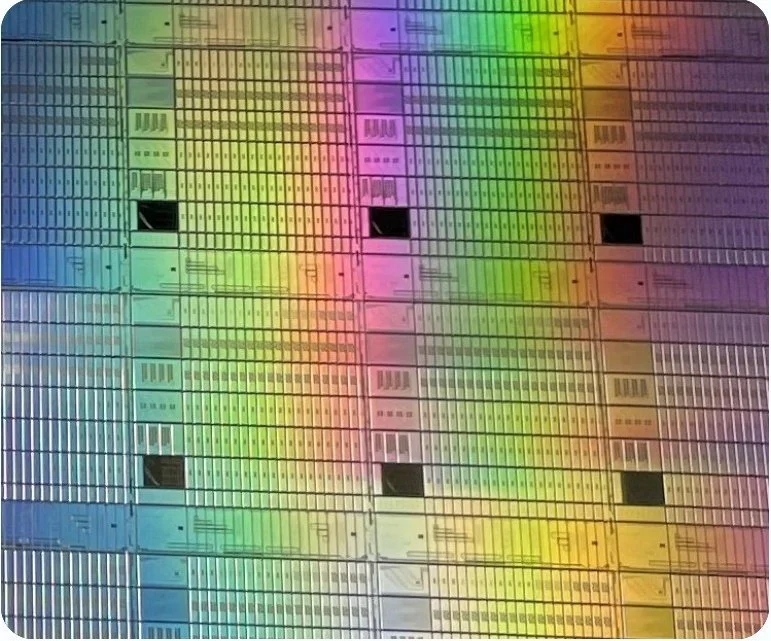
Made at wafer scale.
Photonic chips built on CMOS-compatible processes, priced for one consumable per batch.
ProA Load Control · Patent pending
At a glance.
| Measures | Antibody inline at the Protein A column outlet, in real time |
|---|---|
| Detection | 0.01% of a 5 g/L feed (bench) |
| Regeneration | Resets on the low‑pH elution step, every cycle in the batch |
| Sanitization | Stays in line through NaOH CIP for the whole batch |
| Format | One disposable cartridge per batch; reusable reader |
| Development housing | Fingertight fittings, batch or multicolumn |
Bench data, non‑GMP. Early‑access pilots run at bench or PD scale.
Peer‑reviewed research
Research behind the platform.
Published studies of photonic sensing, disposable sensor packaging and related antibody assays. Each paper addresses a specific platform and application.
2026
Multi‑readout photonic sensing
A multi‑readout photonic sensor for rapid diagnosis of Von Willebrand disease
Butt et al. · npj Biosensing 3, Article 7 · 2026
Measures Von Willebrand factor concentration and binding activity in plasma with an 18-plex disposable photonic sensor. Evaluated using 37 single-donor plasma samples.
2025
Enzyme activity and concentration
A Dual-Readout Photonic Sensor for Simultaneous Measurement of Enzyme Activity and Concentration
Butt et al. · ACS Sensors 10(8), 6115–6122 · 2025
Measures Cathepsin-L concentration and activity in one disposable photonic assay, including evaluation in 25 single-donor human serum samples.
2024
Multiplex photonic sensing
A Multiplex “Disposable Photonics” Biosensor Platform and Its Application to Antibody Profiling in Upper Respiratory Disease
Bryan et al. · ACS Sensors 9(4), 1799–1808 · 2024
Demonstrates multiplex antibody profiling in human serum and saliva using a compact disposable photonic platform.
2023
Integrated optical readout
Biosensing with Silicon Nitride Microring Resonators Integrated with an On‑Chip Filter Bank Spectrometer
Bryan et al. · ACS Sensors 8(2), 739–747 · 2023
Studies silicon nitride microring biosensors with an integrated on‑chip spectrometer for optical readout.
2023
Real‑time sensing in flow
A photonic biosensor-integrated tissue chip platform for real‑time sensing of lung epithelial inflammatory markers
Cognetti et al. · Lab on a Chip 23, 239–250 · 2023
Integrates photonic sensors with a tissue chip to monitor inflammatory cytokines released by lung epithelial cells in real time.
2021
Disposable sensor packaging
Disposable photonics for cost-effective clinical bioassays: application to COVID-19 antibody testing
Cognetti et al. · Lab on a Chip 21, 2913–2921 · 2021
Combines silicon nitride ring resonators with disposable microfluidic cards and demonstrates antibody measurements in human samples.
2020
Related assay research · AIR platform
Array-based analysis of SARS-CoV-2, other coronaviruses, and influenza antibodies in convalescent COVID-19 patients
Steiner, Cognetti et al. · Biosensors and Bioelectronics 169, 112643 · 2020
Uses Arrayed Imaging Reflectometry to profile antibodies against respiratory pathogens. This study uses a different optical sensing platform.
View the full publication list on Google Scholar ↗
These publications support the research foundation. They do not establish ProA Load Control performance in a manufacturing process. Current product results are bench data, non‑GMP. Early‑access pilots compare inline breakthrough with offline titer on your feed.
Want the technical detail?
We are glad to walk your process development or PAT team through the method and the data.

Measure proteins in‑process. Not after.
Visit
260 E. Main Street
Rochester, NY 14604
Site
© 2026 Phlotonics, Inc.